
AI in Mobile Apps2026
Fifty apps, two questions: what AI they ship, and what it costs per user. Plus what happens when agents build the app — one real build, measured end to end. For founders, product leads and CTOs.
Built from work with teams at








Four numbers that change the plan
A preview of the data inside. Figures shown here are placeholders until the build log is in.
Six sections, no filler
Each section ends with a 'try this' checklist you can hand to your team, and three of them come with a download.
What changed in 2026
The phone got a model, the stores got rules, and the IDE got an agent. The five shifts that decide what to build this year, with dated sources.
Agents in the mobile build pipeline
Slack brief to spec to UI to code to pull request, with build gates and TestFlight. What the agents may do and what stays human.
A real app, measured
One brief, one agent team, every hour logged: hours per screen, PRs merged untouched, defects caught before QA, cost per feature.
AI features that ship in apps now
Five feature patterns with the cost per user for each, on-device or cloud, and a decision matrix for choosing. Spec sheets to download.
Building with AI: toolchain and store
What generates well, what still needs a person, and what the store will reject. Generated screenshots, preview videos and ASO copy.
The 90-day playbook
Idea to store to the first AI feature, as one loop. Four phases, one downloadable checklist.
From section 2: where the hours went on a real build
The agents did not replace the developer. They replaced the parts of the developer's week that nobody enjoyed: the third CRUD screen that looks like the first two, the test file for it, the string table in eight languages, the pull request description. What was left for the person was the part that decides whether the app is any good: the navigation model, the one native module, the moment the reviewer agent flagged a race condition it could describe but not fix. Below is where the hours of the build went, by who did the work, and
Unlock the full report
Tell us where to send it and keep reading.
Written for the person who decides what gets built
Founders
Which AI features are worth the per-user cost this year, and how much cheaper an agent-built MVP actually is when you count the hours.
Product leads
Feature-by-feature patterns with cost, latency and store-rule implications, and the spec sheets to brief them.
CTOs and mobile leads
What an agent-run pipeline looks like in a real codebase: guardrails, review gates, what merged untouched and what a person had to rewrite.

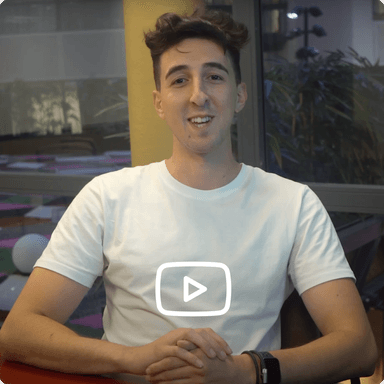




"If you're looking for a team that can support you, help scale your product, and be a true technical partner, slashdev.io is the way to go. Features that took months to finish are getting done in days. They have completely changed my business!"
Read it before your next roadmap review
Six sections, one measured build and a 90-day playbook. Opens straight away, no waiting on an email.
Before you fill in the form
Is the report really free?
Yes. There is no paid version. It is how we introduce ourselves to teams building AI into mobile apps, or letting AI build them.
Will you call me?
Possibly. Someone from Slashdev may call to ask what you're building and whether the numbers matched your experience. Say no and we stop.
How is my data used?
Your details go into our CRM so we can send the report and follow up by email, or by phone or SMS if you gave a number, about the report and our services. You can opt out at any time. We never sell or share them. Our privacy policy has the details.
Is there a new edition every year?
Yes. Mobile moves on the WWDC and Google I/O cycle, so the next edition follows WWDC 2027. Everyone who downloads this one gets it by email first.